Gov. Kathy Hochul stands with CSEA
Under Gov. Kathy Hochul’s leadership, public employees in New York have seen significant, positive reforms to our pensions, benefits, civil service, child care and more! This page is dedicated to the governor’s accomplishments.
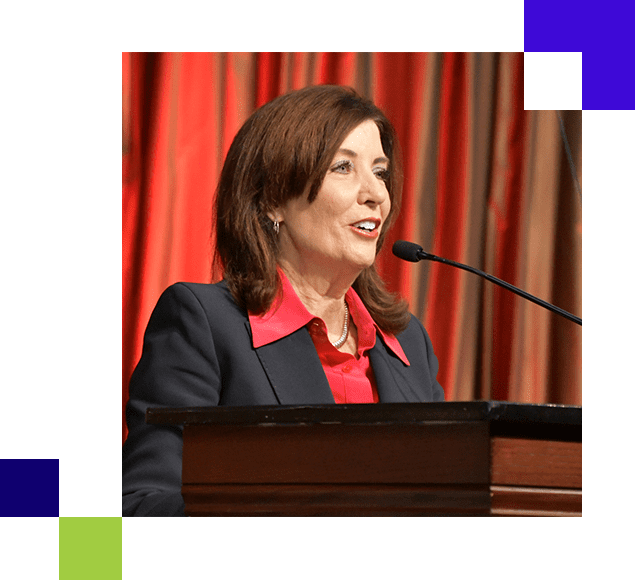
Governor Hochul fights for working people
Gov. Kathy Hochul stands with working people, including making investments in public services and the public workforce; helping improve safety and more.
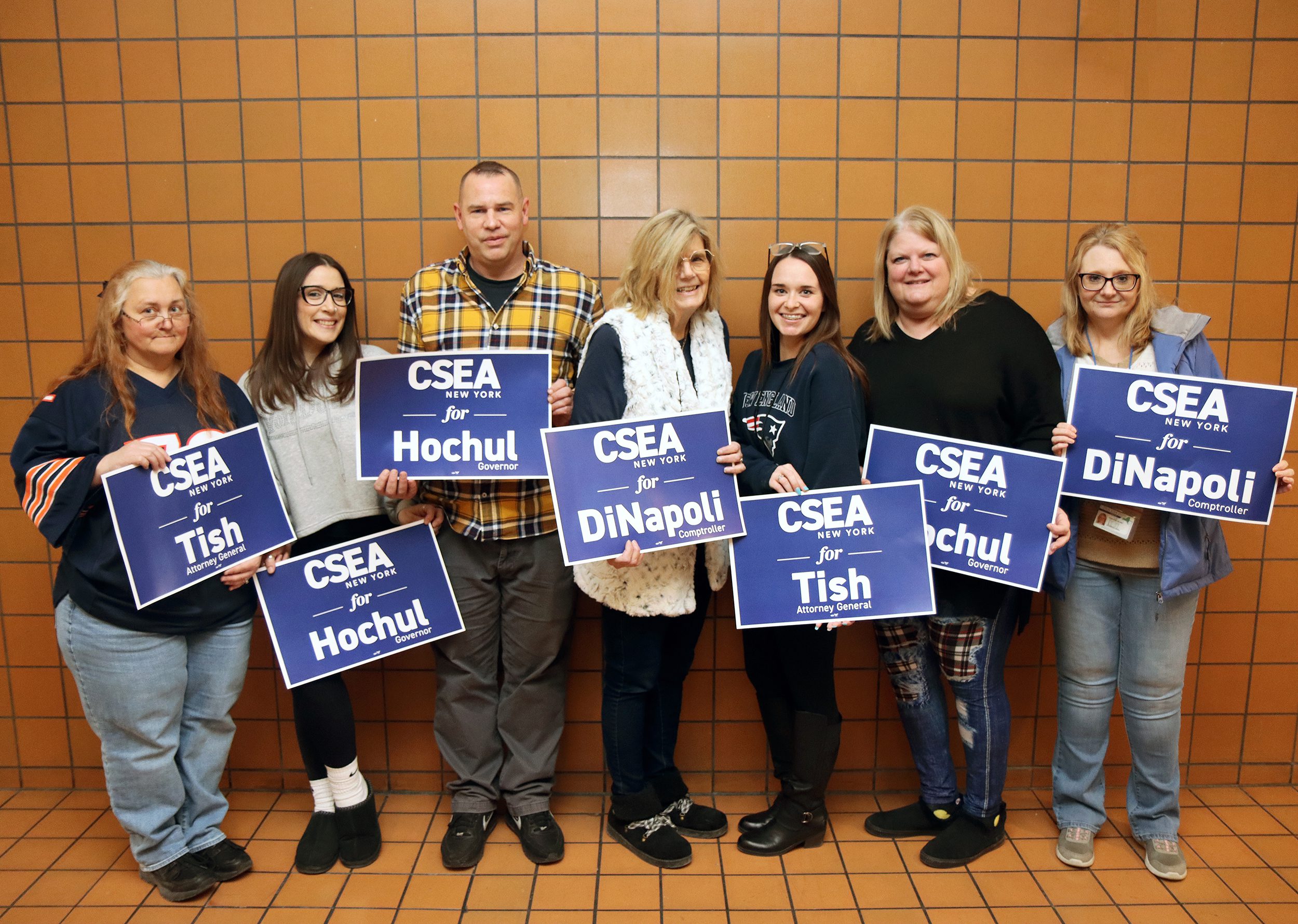
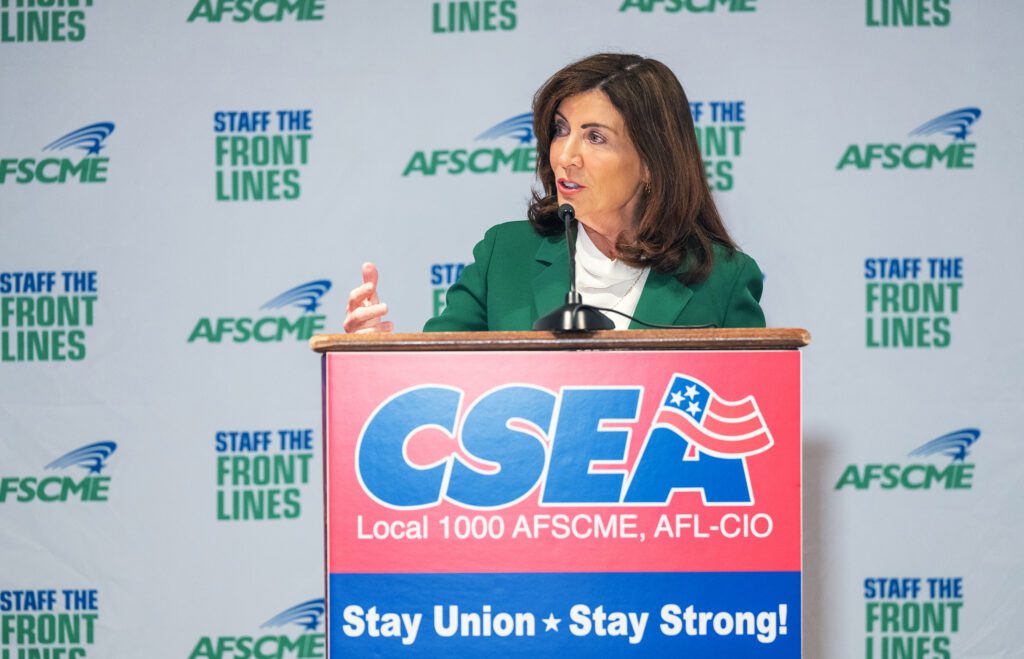
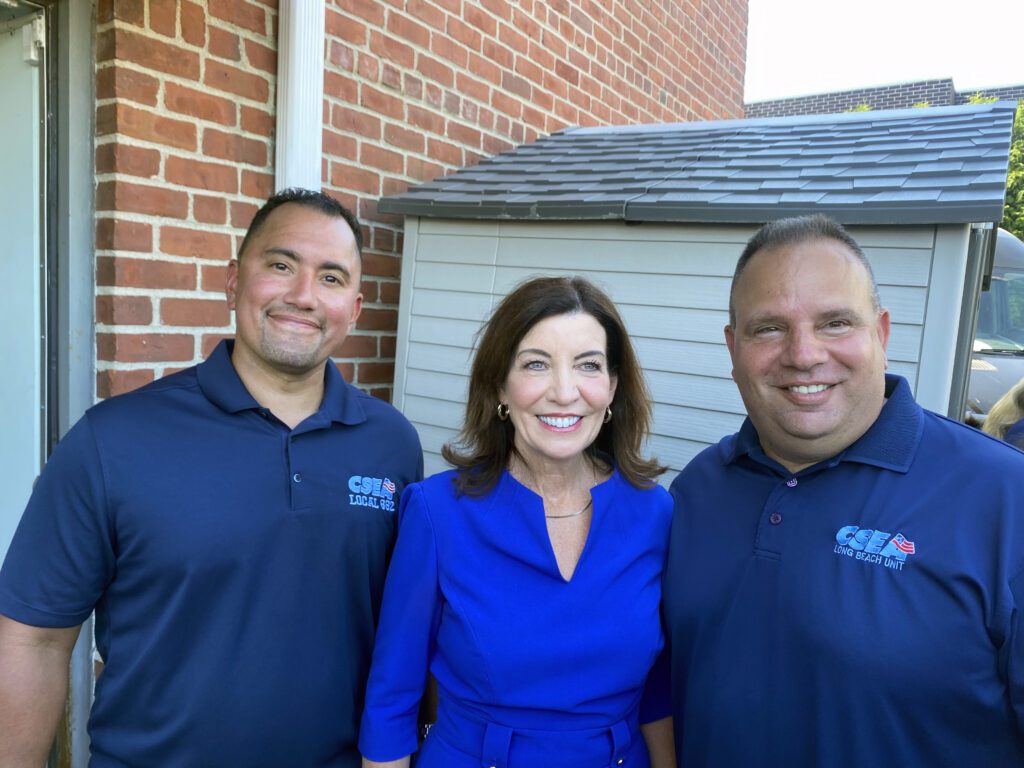
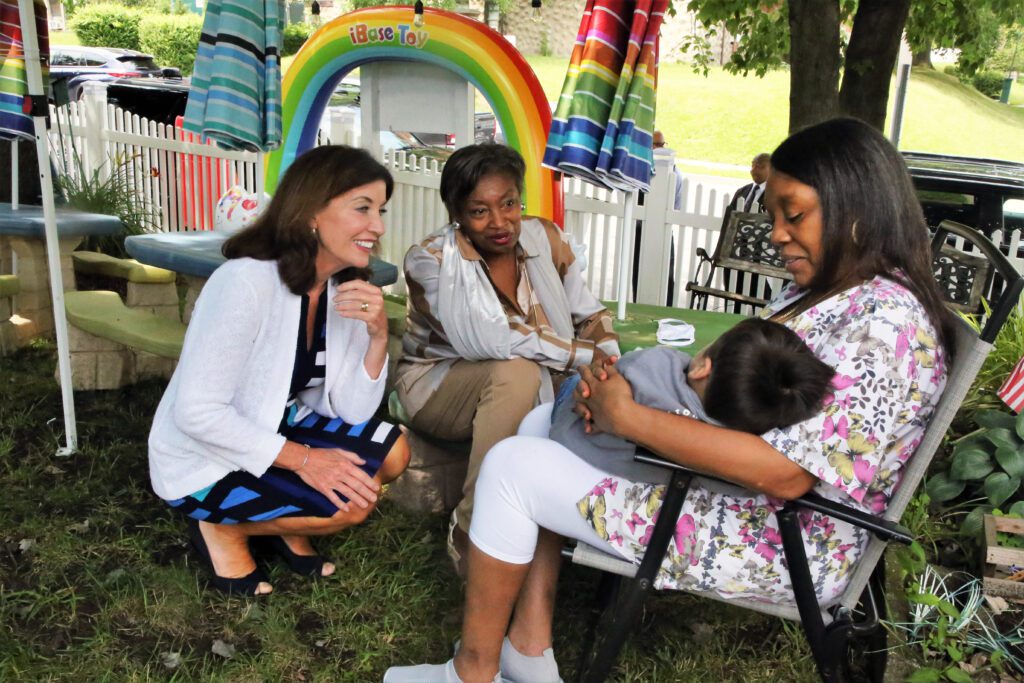
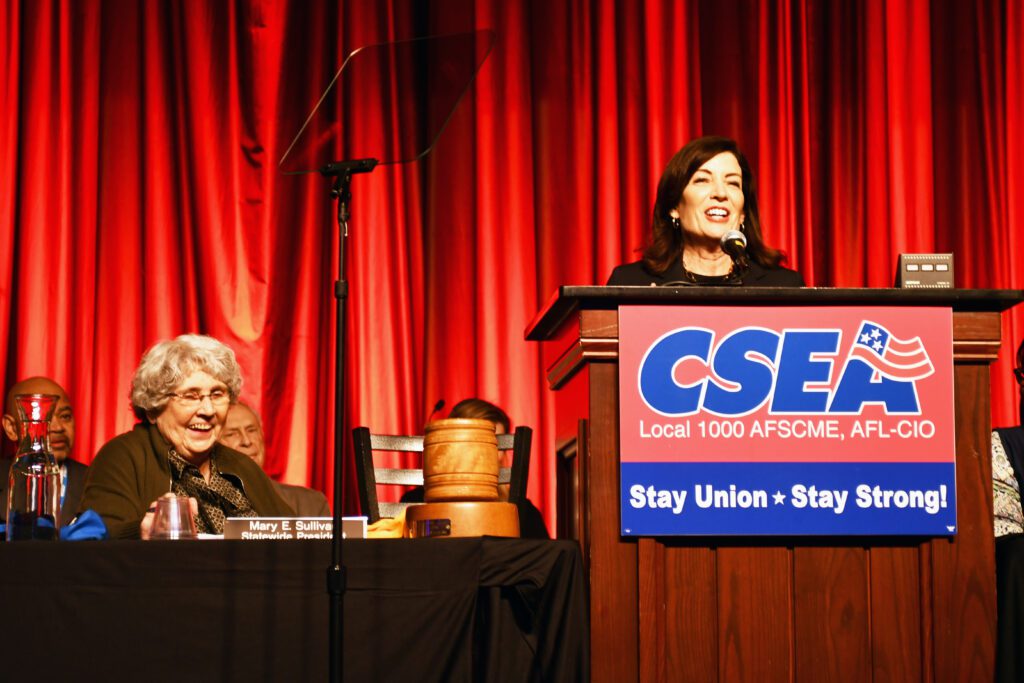
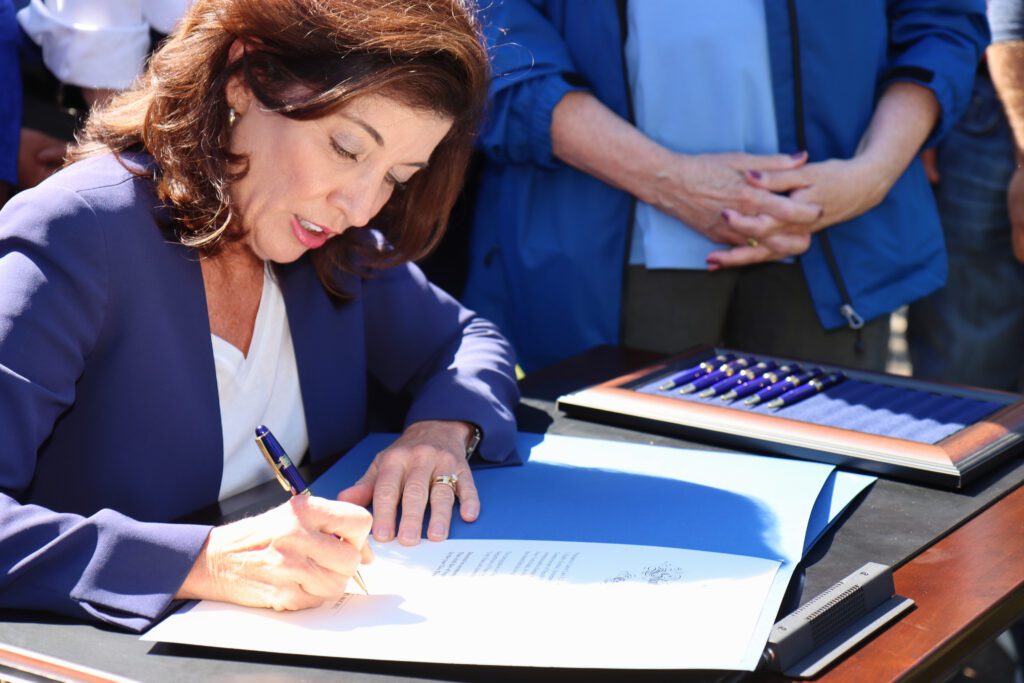
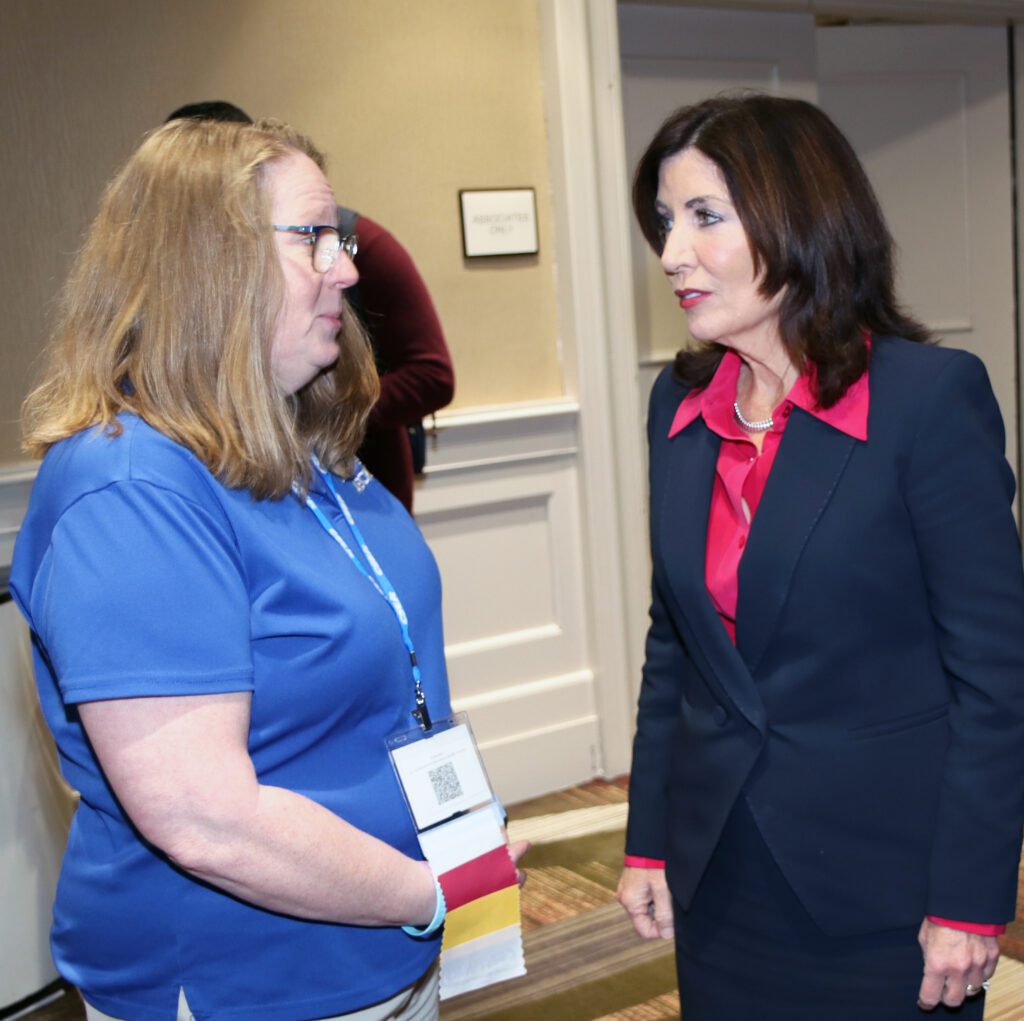
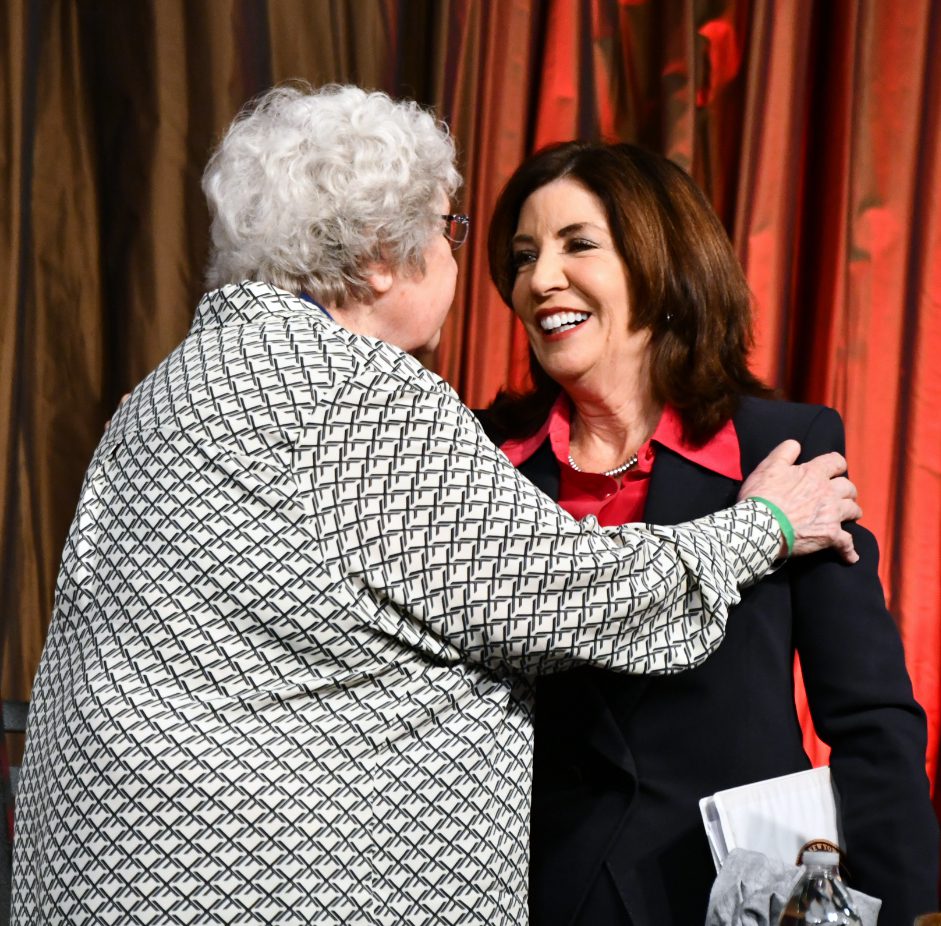
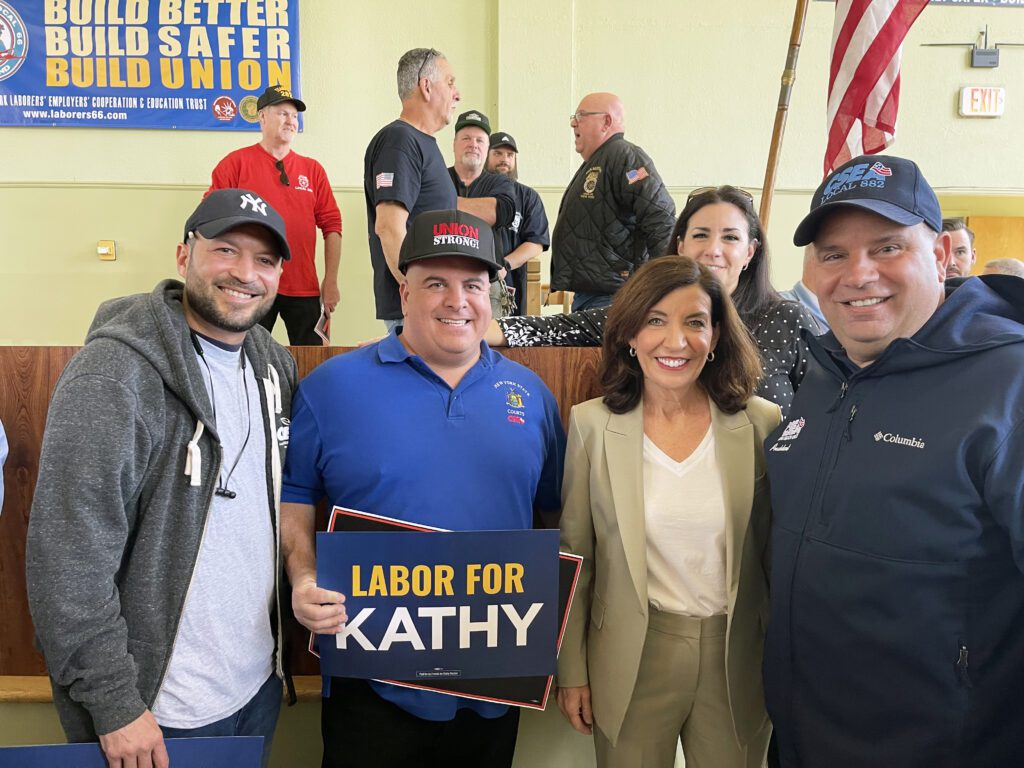
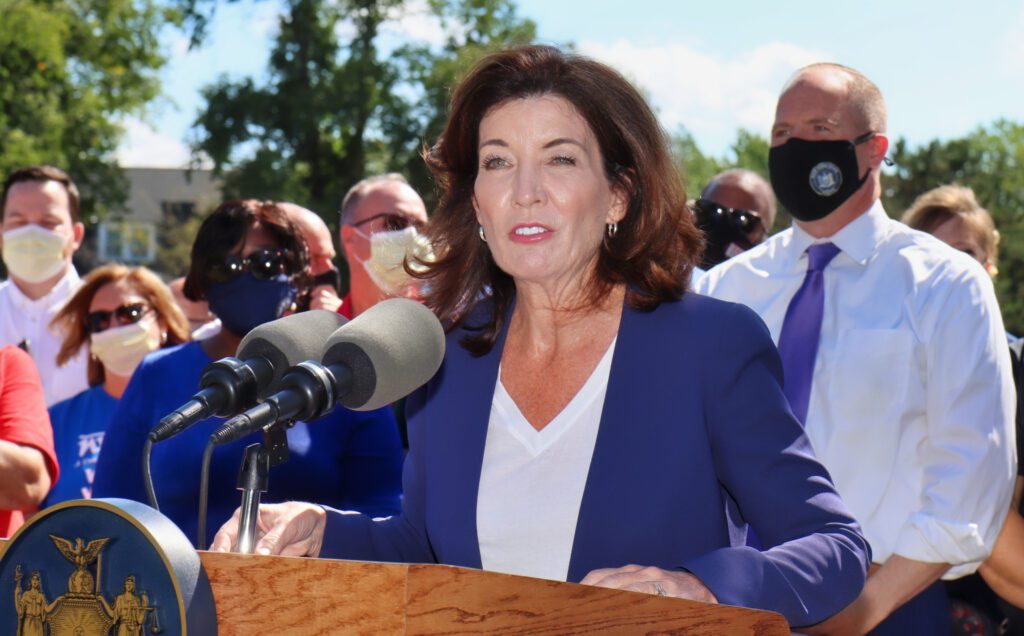
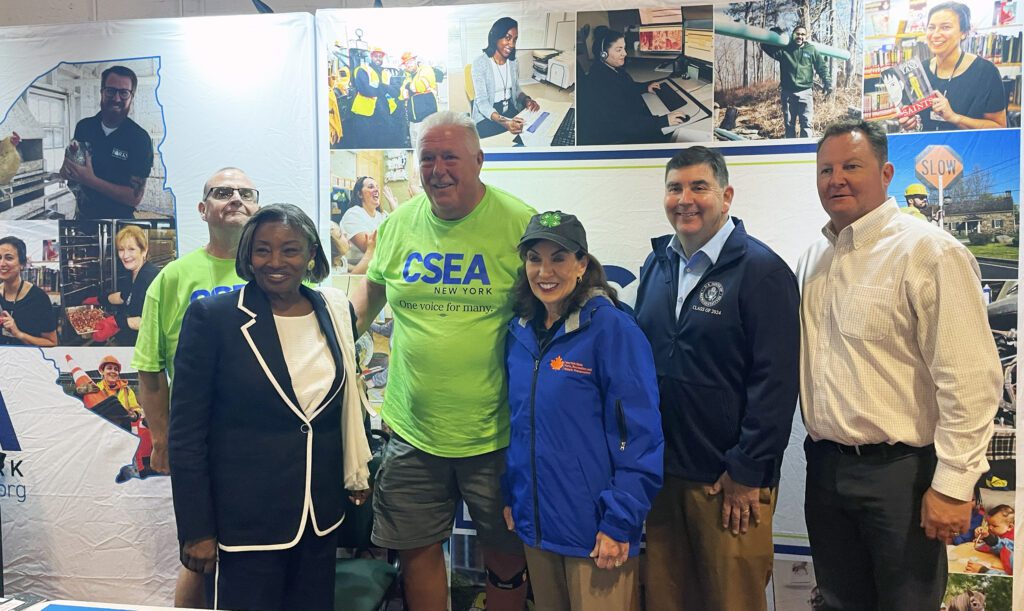
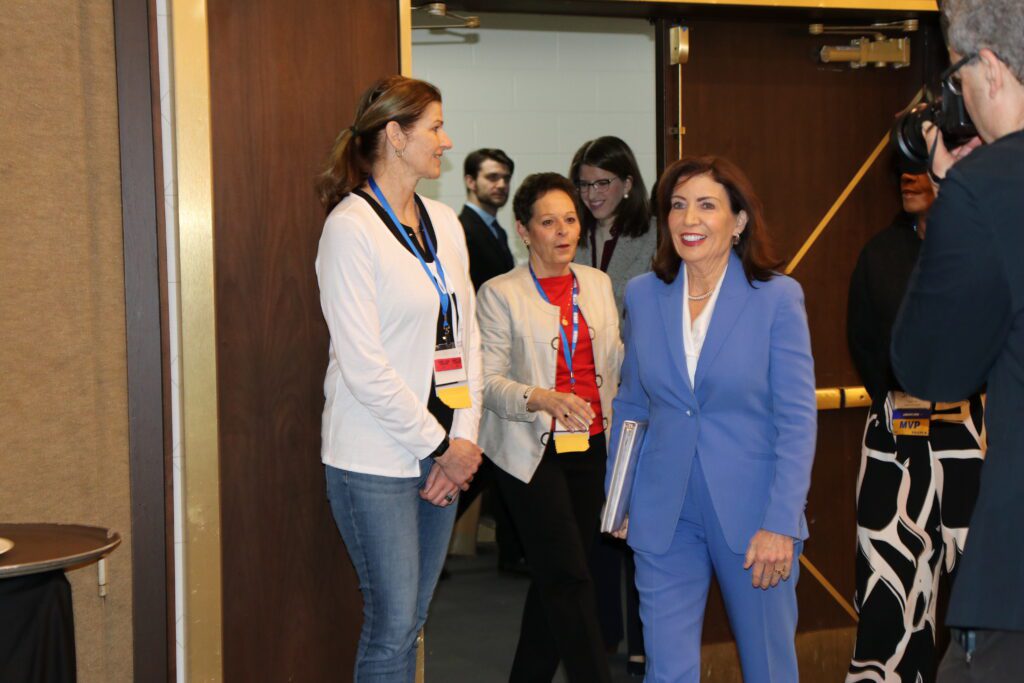
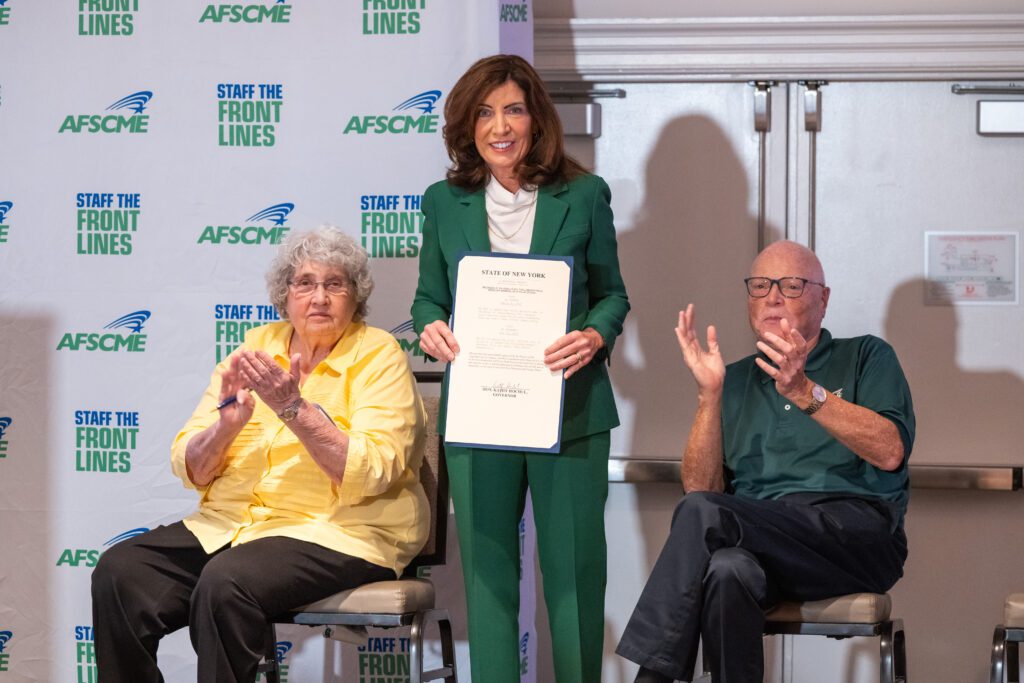
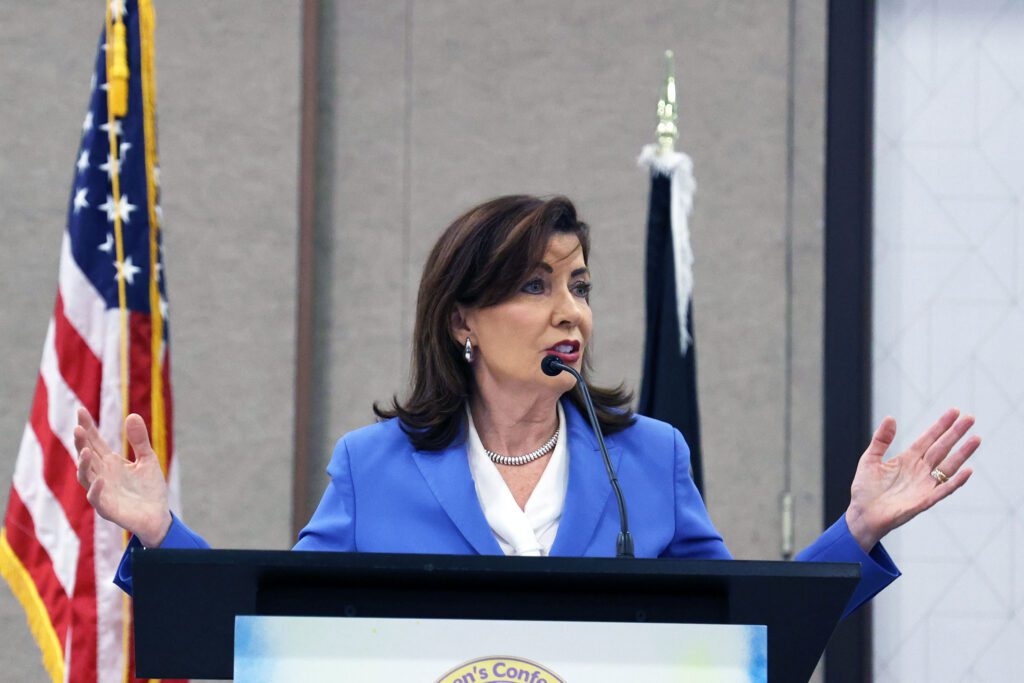
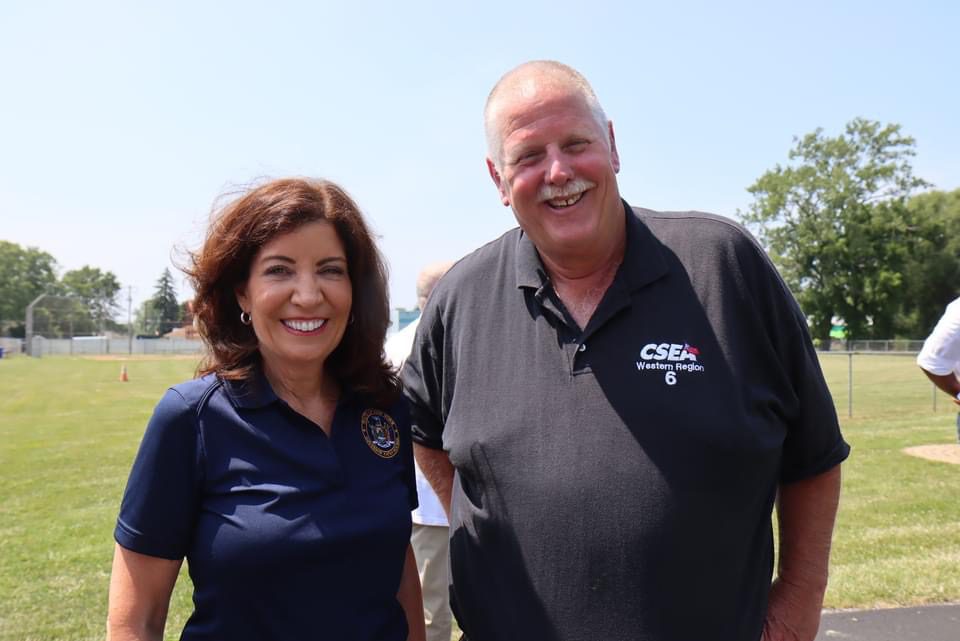
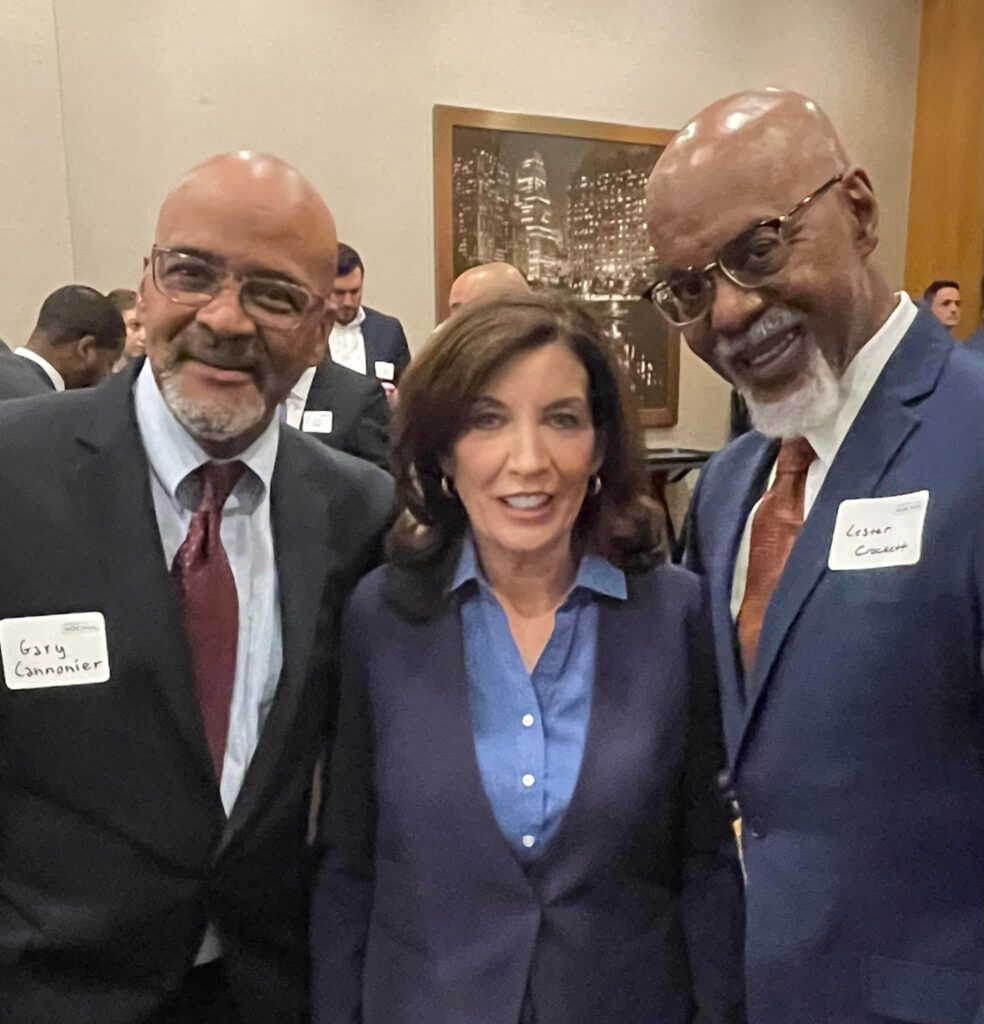
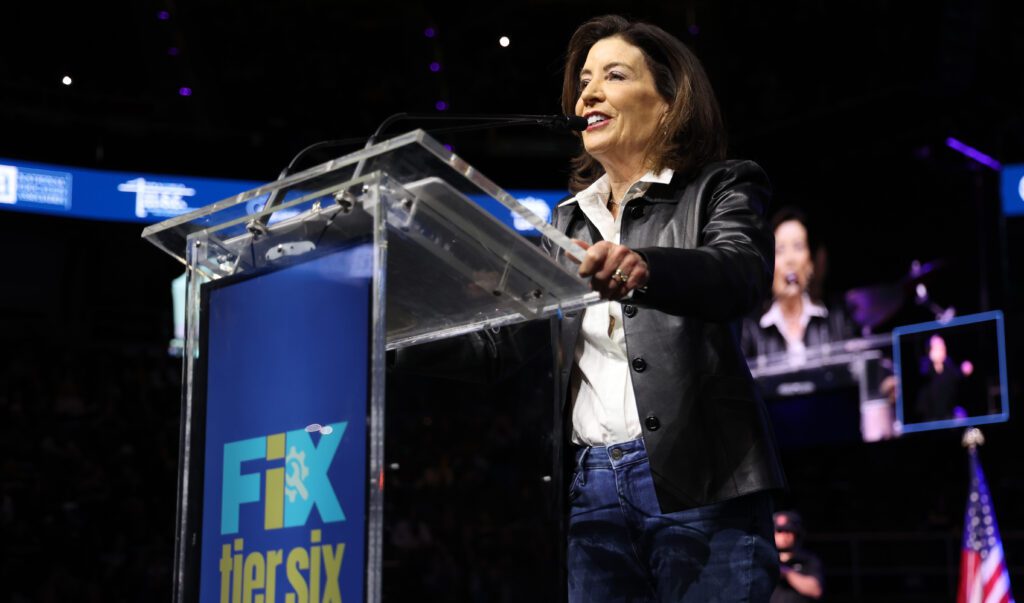
See images of Governor Hochul with CSEA members
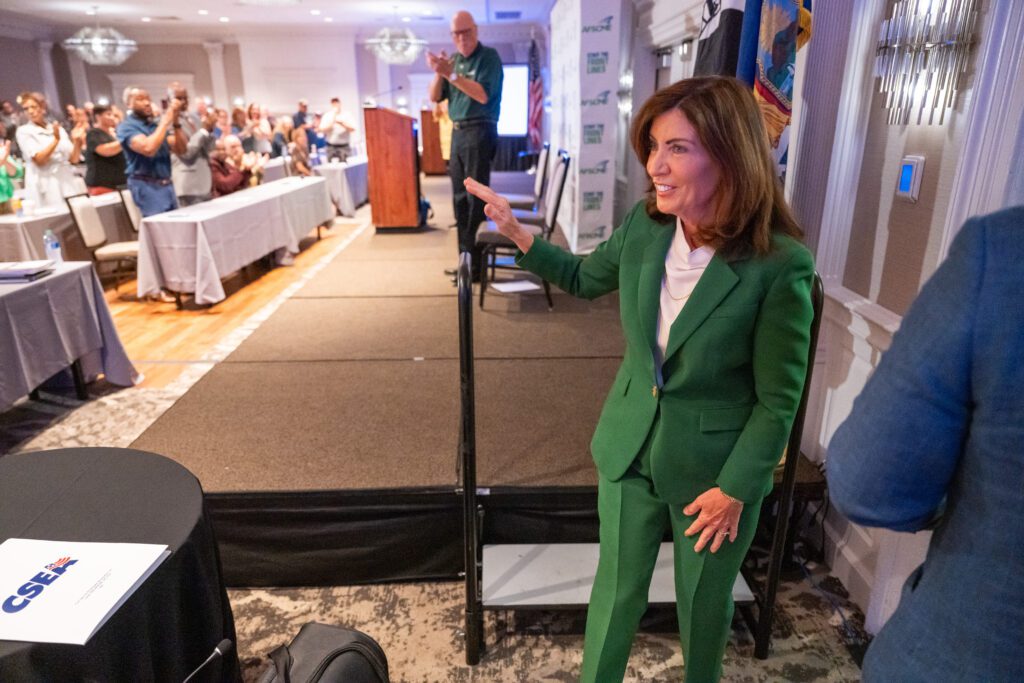
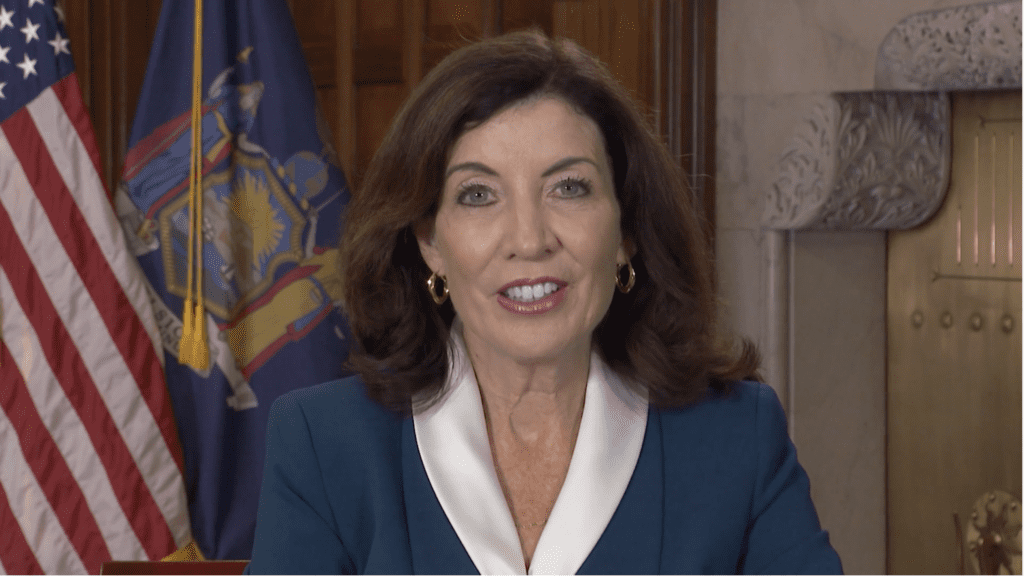
Governor Hochul's statements about labor
What Governor Hochul has done for workers
Below is a list of the legislation and budget provisions that Governor Hochul has accomplished.
• Excluded COVID-19 overtime from retirement calculations (FY22-23 budget)
• Shortened vesting time from 10 to 5 years for Tier 5 & 6 employees (FY22-23 budget)
• Reduced the final average salary for pension calculations from 5 to 3 years (FY23-24 budget)
• Extended parental leave to 12 weeks fully paid for more than 150,000 state employees (over 80% of the workforce)
• Increased workers’ compensation minimum benefits to $275 in 2024 and $325 in 2025 (FY23-24 budget)
• Signed a 5-year state contract with CSEA providing 2 percent raises for the first two years and 3 percent for the following three years, in addition to one-time bonuses of $3,000
• Raised the weekly maximum paid family leave benefit (from $1,131 in 2022 to higher levels in 2023–24) (FY23-24 budget)
• Paid off all federal unemployment insurance (UI) debt, which allowed raising the maximum weekly UI benefit from $504 to $869 (FY25-26 budget)
• Increased the minimum wage to $16 per hour in New York City ($15 upstate) by 2026 and indexed it to inflation thereafter (FY23-24 budget)
• Approved continuation of state health insurance for survivors of deceased state workers (removing a 10-year service requirement) (Chapter 675 of the Laws of 2023)
• Ensured that all employees can access workers’ compensation for legitimate work-related mental health claims (Chapter 79 of the Laws of 2025)
• Created a statewide standard for bumping, retreating, and rehiring rights for non-competitive and labor class employees in state and local governments (Chapter 676 of the Laws of 2024)
• Provided a 25-year 50% retirement to firefighters employed by the Division of Military and Naval Affairs (FY25-26 budget)
• Provided firefighters employed by DMNA a 50% final average salary pension if they are physically or mentally incapacitated because of a disability caused by an on-the-job injury (Chapter 533 of the Laws of 2021)
• Launched “NY HELPS” in early 2024, temporarily waiving civil service exam requirements for thousands of public job openings
• Offered continuous recruitment exams for open-competitive positions, which allow exams to be offered more frequently and keep hiring lists up to date (FY23-24 budget)
• Waived fees for all state civil service exams from July 1, 2023, through December 31, 2025 (FY23-24 budget), and extended the waiver through December 31, 2027 (FY25-26 budget)
• Required the Department of Civil Service to examine the state’s pay structure to ensure compensation is competitive with the private sector (FY23-24 budget)
• Created Centers for Careers in Government to connect New Yorkers to careers in public sector employment (FY23-24 budget)
• Indefinitely deferred salary deferral and “lag payroll” requirements for new state employees starting in FY2024–25 (FY23-24 budget)
• Created an optional lag pay program for new state employees to provide them with an option to receive a payment between their start date and first paycheck (FY25-26 budget)
• Funded a Public Service Matters marketing campaign to promote job opportunities in the public sector (FY23-24 budget)
• Required the State Civil Service Department (DCS) and municipal civil service commissions to issue announcements of competitive civil service examinations to BOCES, high schools, colleges, universities, local social services districts, and job training programs (Chapter 358 of the Laws of 2023)
• Prohibited the displacement of state employees when a state agency uses an AI program or system (Chapter 96 of the Laws of 2025)
• Safeguarded workers from any retaliation related to their refusal to attend captive audience meetings (Chapter 354 of the Laws of 2024)
• Allowed time spent by an employee in provisional status to count towards time required for a promotional exam if the employee becomes competitive in the same title without a break (Chapter 307 of the Laws of 2024)
• Required that time spent as a provisional employee be counted towards an employee’s probationary term upon receiving a permanent appointment in the same title (Chapter 356 of the Laws of 2023)
• Allowed individuals who are within 12 months of meeting the age or education requirements of a given civil service job to take an exam for that position (Chapter 303 of the Laws of 2024)
• Required the Department of Civil Service to review and update civil service exams every five years (Chapter 305 of the Laws of 2024)
• Required the Department of Civil Service to review all jobs with college degree requirements to see if education requirements can be substituted for work experience (FY24-25 budget)
• Increased municipal aid by $100 million over two years (FY24-25 & FY25-26 budgets)
• Provided $335 million to the City of Albany through the “Championing Albany’s Potential Initiative,” to increase economic development, public safety, and enhance affordability (FY25-26 budget)
• Provided $500 million to local governments for clean water infrastructure investments (FY25-26 budget)
• Created a $100 million Pro-Housing Supply fund for local governments to assist with infrastructure projects necessary to create new housing, such as sewer and water infrastructure upgrades (FY25-26 budget)
• Exempted local government employers from Dutchess, Nassau, Orange, Putnam, Rockland, Suffolk and Westchester counties from the MTA Tax (FY25-26 budget)
• Allowed Child Protective Services caseworkers to complete certain training requirements, excluding the annual in-service training requirement, virtually (Chapter 470 of the Laws of 2024)
• Increased funding to local probation departments by $5 million for payments to government and not-for-profit programs providing pretrial services, including screening, assessments, and supervision (FY23-24 budget)
• Maintained the community college funding floor, which requires that SUNY’s community colleges receive at least 100% of prior year’s funding (FY24-25 & FY25-26 budgets)
• Implemented free SUNY community college for students aged 25 to 55 pursuing associate degrees in high-demand industries, advanced manufacturing, technology, cybersecurity, engineering, artificial intelligence, nursing, green and renewable energy (FY25-26 budget)
• Provided $85 million for the development and operation of public safety communications systems, like 9-1-1 call centers (FY24-25 budget)
• Provided consistent increases to school aid throughout her time in office, with $37.6 billion provided in the FY25-26 budget
• Provided $160 million to implement universal free breakfast and lunch for all students in public, private, and charter schools participating in the national school lunch program
Banned the use of internet-enabled devices (e.g., smart phones, smart watches) during school hours by students and requires school districts to consult with unions when developing these policies (FY25-26 budget)
• Required schools to develop workplace violence prevention programs (Chapter 351 of the Laws of 2023)
• Requires schools to relieve heat-related discomfort when inside temperatures rise above 82 degrees (Chapter 596 of the Laws of 2024)
• Increased Disproportionate Share Funding (DSH) for the three SUNY hospitals by $72 million (FY23-24 budget)
• Shifted SUNY hospital debt service to the state, saving the three hospitals $65 million (FY23-24 budget)
• Provided $500 million in matching funds for endowment contributions at SUNY’s University Centers (FY23-24 budget)
• Provided $750 million in capital funding and $200 million in operating funding for SUNY Downstate Hospital (FY24-25 & FY25-26 budgets)
• Provided $450 million in capital funding to SUNY Upstate to build a new emergency department (FY25-26 budget)
• Provided funding for 150 new state-operated inpatient psychiatric beds (FY23-24 budget), and funding for 200 new state-operated inpatient psychiatric beds (FY24-25 budget)
• Provided funding for 100 new forensic inpatient state operated psychiatric beds at Manhattan Psychiatric Center and a $160 million capital investment to expand the forensic unit (FY25-26 budget)
• Provided $170 million in new investments to OPWDD, including new funding for day program services, family support services, and residential services for people with developmental disabilities (FY24-25 budget)
• Invested $18 million to renovate the Sunmount campus in Tupper Lake (FY25-26 budget)
• Provided $75 million in funding to modernize the OPWDD Institute for Basic Research in Staten Island (FY25-26 budget)
• Extended the OPWDD Care Pilot Program for seven years (Chapter 670 of the Laws of 2021; FY22-23 budget; FY25-26 budget)
• Provided health and mental hygiene workers with a $3,000 “Health care Bonus” (FY22-23 budget)
• Created a nurse loan repayment program for hard-to-staff areas (FY22-23 budget)
• Established hospital clinical staffing committees (Chapter 155 of the Laws of 2021)
• Established standard nursing home staffing levels (Chapter 156 of the Laws of 2021)
• Increased in the Medicaid reimbursement rate to 7.5% for hospitals and 6.5% for nursing homes (FY23-24 budget)
• Provided $825 million in additional Medicaid rate reimbursements (FY24-25 budget)
• Increased Medicaid funding for hospitals (+$425 million) and nursing homes (+$445 million) (FY25-26 budget)
• Provided $500 million in additional support for financially distressed and safety net hospitals (FY24-25 budget)
• Allocated $1 billion in new funding to the Health Care Facility Transformation Program, which provides capital funding to support projects at safety-net hospitals (FY25-26 budget)
• Extended the 2022 COVID sick‐leave program for health care workers through July 31, 2025 (FY24-25 budget)
• Established staffing standards for nursing homes (Chapter 156 of the Laws of 2021)
• Replaced all board members at Nassau University Medical Center and provided $50 million in new capital funding for the hospital (FY25-26 budget)
• Provided $500 million for a Child Care Workforce Retention Grant Program, which includes grants of up to $2,000 for family-based child care workers (FY23-24 budget)
• Required counties to reimburse child care providers for 80 absences per year, an increase from 24 (FY23-24 budget)
• Provided incentives to providers who open child care programs in underserved areas (FY23-24 budget)
• Created a child care substitute pool to ensure access to verified and qualified professionals when regular staff are unavailable (FY25-26 budget)
• Provided $110 million to renovate and build child care programs, including $10 million for home-based programs (FY25-26 budget)
• Required LSSDs to offer direct deposit for child care providers (Chapter 650 of the Laws of 2021)
• Created the work zone speed camera program (Chapter 421 of the Laws of 2021), doubled the number of cameras available to the Department of Transportation and Thruway Authority, and expanded the program to the Bridge Authority and Triborough Bridge and Tunnel Authority (FY25-26 budget)
• Strengthened enforcement of wage theft judgments by empowering the state Department of Labor to levy liens and stop-work orders (FY25-26 budget)
• Allowed striking workers to collect unemployment insurance benefits after a two-week waiting period, a decrease in wait time (FY25-26 budget)
• Reduced income taxes for joint filers making up to $323,200 annually, benefiting 77% of New Yorkers (FY25-26 budget)
• Provided $2 billion in funding to issue inflation refund checks to New Yorkers (FY25-26 budget)
• Increased the child tax credit to $1,000 for children aged 0-3 and $500 for children aged 4-16 (FY25-26 budget)