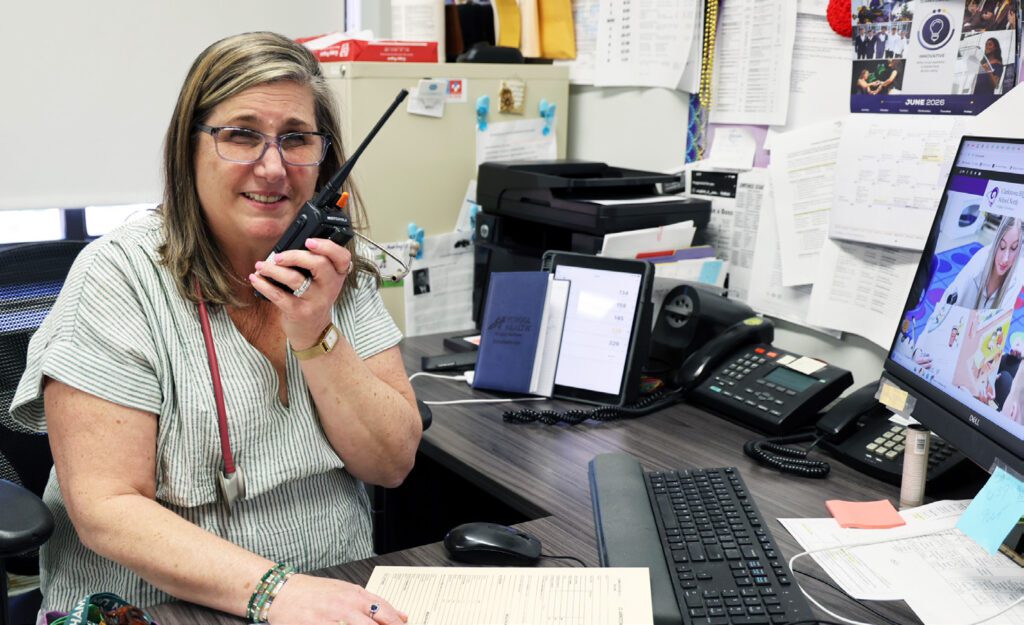
NEW CITY — Think back to childhood and your interaction with your school nurses.
If Band-Aids and ice packs are the first things popping into your mind, the school nurses of today would like a quick word.
“It’s like a mini ER in here,” said Clarkstown School District Nurses Unit President Camilla Levine, pointing to her office at Clarkstown High School North. “We have to know how to prioritize juggling multiple issues at once.”
Levine and her fellow nurses at the district must be on constant alert, ready to handle emergencies while monitoring students with chronic conditions.
With a new school year underway, the Clarkstown school nurses are highlighting the work they do to generate greater understanding in their community of the scope of their jobs.
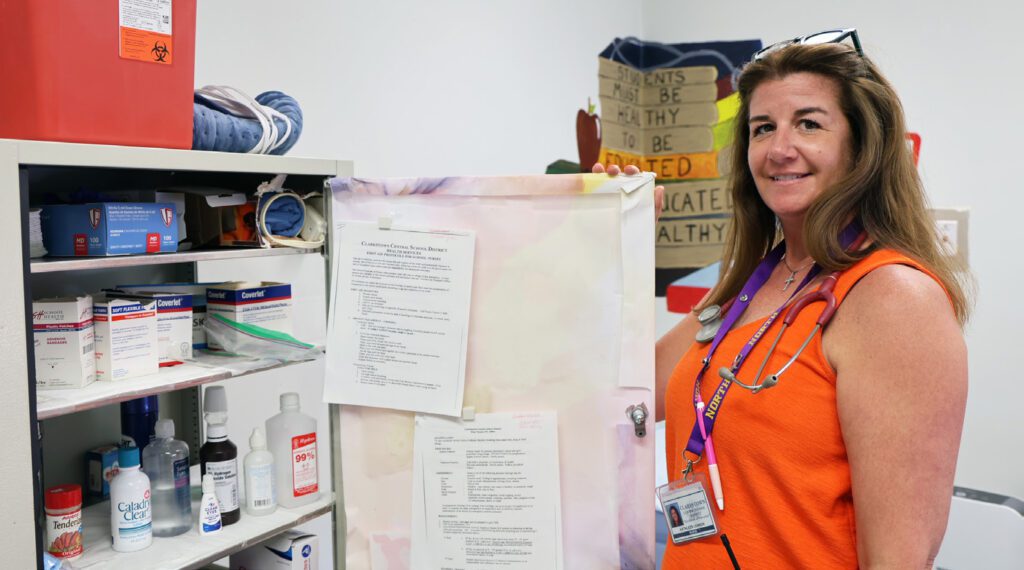
At Clarkstown High School North, one of two main high schools in the large suburban district, Levine and fellow nurse Kathleen Lennon handle the needs of roughly 1,200 students, along with any emergent health needs of faculty and staff. For colleagues at smaller schools such as CSEA member Christine Riordan at Little Tor Elementary School, there’s only one nurse per school.
On the administrative end, nurses begin in the summer collecting physicals and immunization records to ensure compliance with state requirements. On school days, they’re logging medication regimens and adhering to written health care plans. They also educate teachers about student medical issues, having dealt with cancer treatment, sickle cell anemia, and some rarer conditions.
Technology has brought benefits. On Levine’s desk sits an iPad linked to the Dexcom sensors worn by many students with diabetes. The sensors provide live updates to parents’ digital devices, while nurses can also monitor students’ blood sugar levels in real time.
By the time they reach high school, many students are able to self-manage blood sugar issues, but Levine said the introduction of the Dexcom sensors has allowed more stability for younger students.
“It requires constant monitoring because they aren’t as independent at that age,” said Levine.
Along with common illnesses, emergencies arise. For students with documented allergies, nurses keep EpiPens in their offices, and Levine and Lennon have had to administer them.
With drug use an unfortunate reality in all communities, they’ve also had to administer Narcan. In addition, they deal more frequently with students encountering anxiety and mental health diagnoses.
While the job has more than its share of seriousness, some of the lighter moments balance out the workday. From helping out at school events such as prom to repairing a pair of broken eyeglasses, they help students — and workers — keep it together to get through the day.
“Sometimes, we’re the nurse, other times we’re MacGyver,” said Lennon, recounting fixes she’s found for different situations.
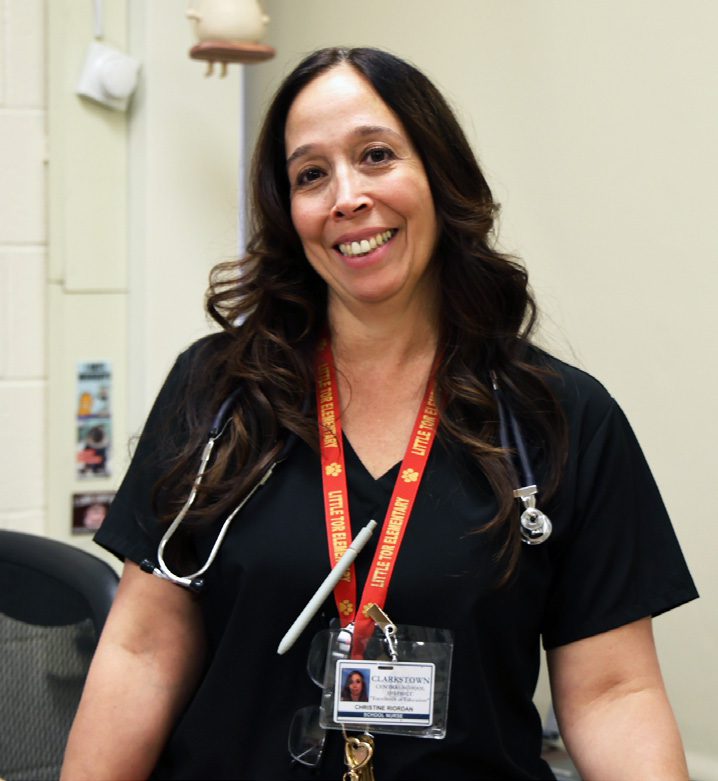
By highlighting their responsibilities, CSEA Clarkstown school nurses hope to shine a light on what is largely a behind-the-scenes job. Their hope is to solidify pay equity within their bargaining unit — a campaign they are now undertaking — and increase respect for their chosen profession.
“Not only have we completed our education, we’ve all passed our nursing boards and most have prior clinical experience,” said Lennon.
The school nurses of today are an essential part of a well-run school, said Levine.
“We’re so much more than the Band-Aids and ice packs,” Levine said.
— Jessica Ladlee