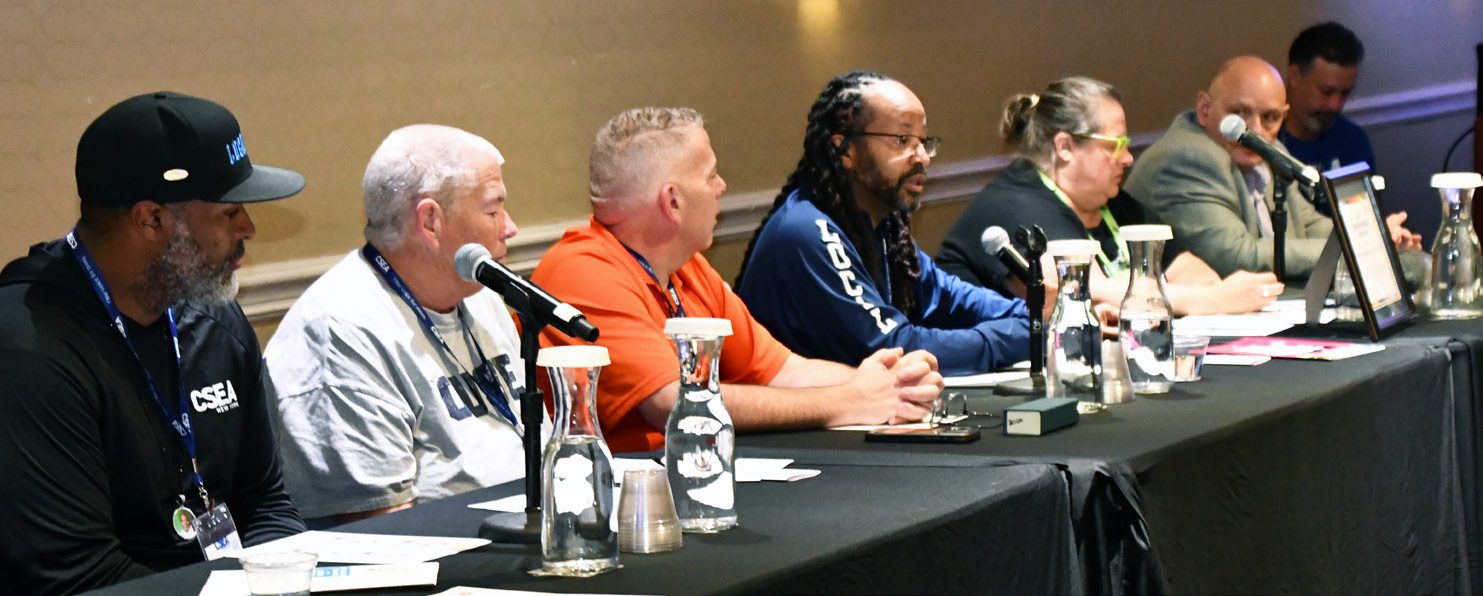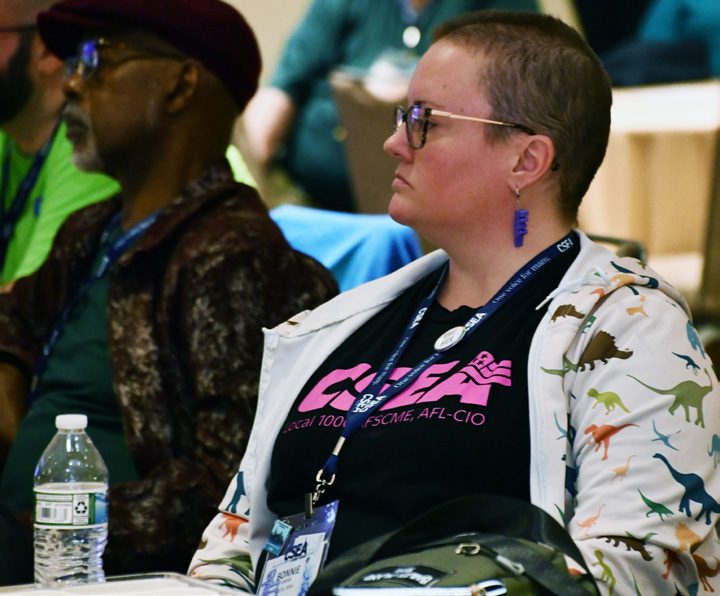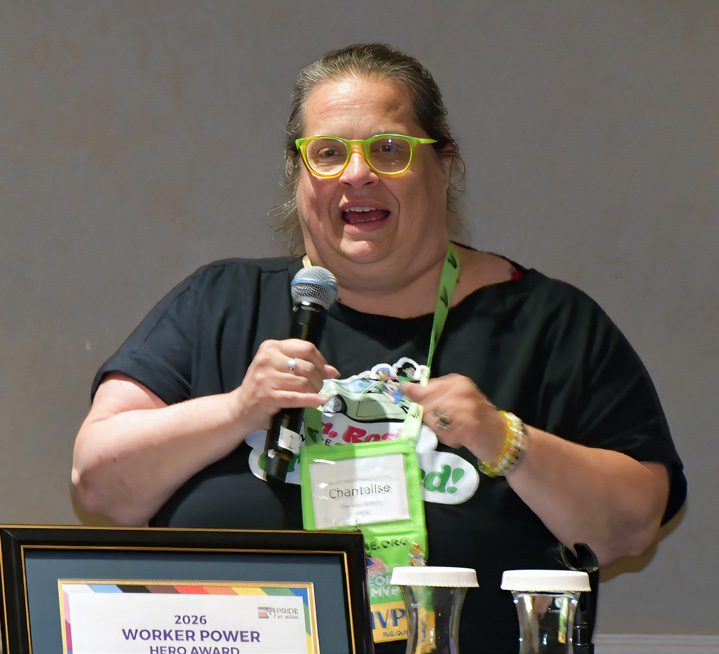
MANHATTAN — Attendees at the 116th CSEA Annual Delegates Meeting in New York City who participated in the LGBTQ+ Caucus heard from several speakers about the importance of allyship in supporting members of the LGBTQ+ community, particularly in the workplace.
“It’s important to create safe spaces and make sure that the LGBTQ+ community feels supported and valued in our workplaces. Representation matters!” said Chantalise DeMarco, statewide LGBTQ+ Committee chair and Central Region executive vice president.
When CSEA member Yan Vazquez and his partner Alex Gonzalez, who work at SUNY Upstate Medical Center, were detained by U.S. Immigration and Customs Enforcement (ICE) last year, Ali Cottrell sprang into action on their behalf. Cottrell, president of the SUNY Upstate Medical Center Local, worked with CSEA leaders, politicians and other unions to organize demonstrations calling for the release of Vazquez and Gonzalez, who belong to the LGBTQ+ community.
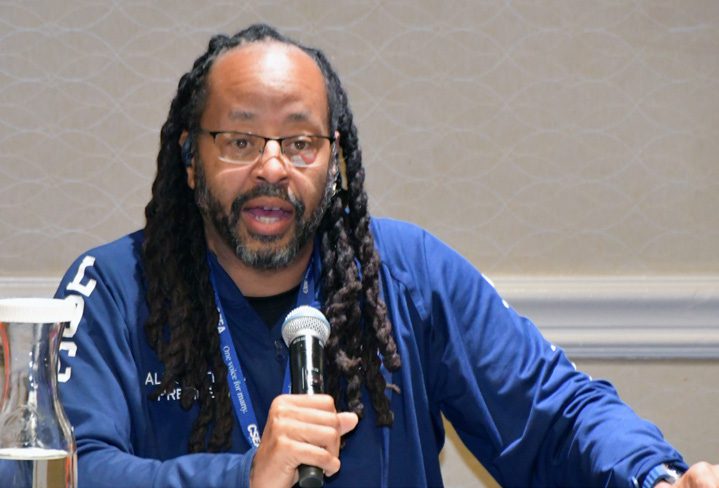
“It’s not about what organizations members belong to but who they are as individuals,” said Cottrell, addressing the group. Cottrell emphasized the importance of putting allyship into action and protecting all members, regardless of race, gender, ethnicity or sexual orientation.
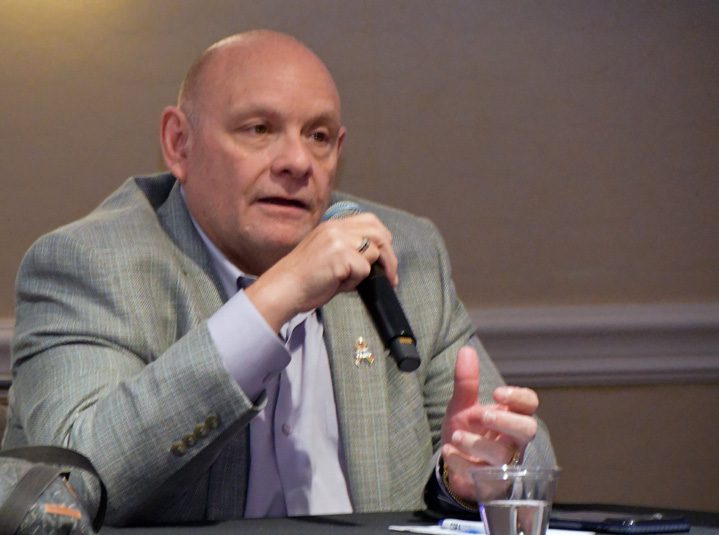
Central Region President Kenny Greenleaf echoed that idea. “We have a responsibility to represent every one of our members,” said Greenleaf.
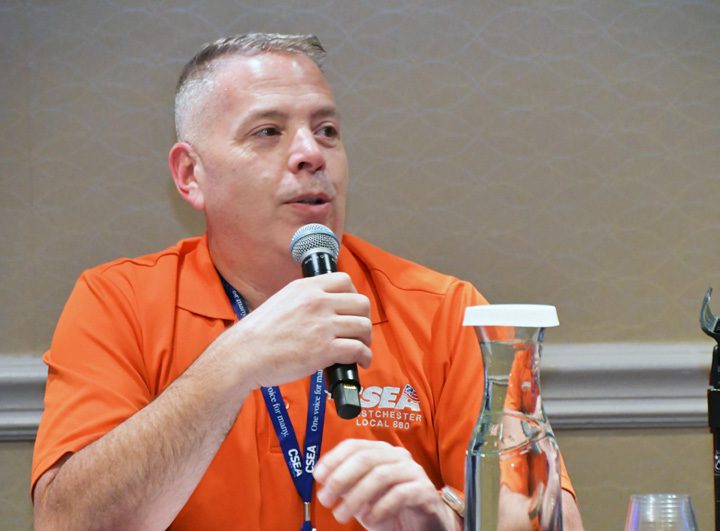
Another recurring theme was the importance of ensuring LGBTQ+ members and members of other minority groups feel comfortable in the workplace. “As an officer and an activist, we just need to make sure our members are comfortable,” said Rob Schweit, a member of the LGBTQ+ Committee and Westchester County Local 1st vice president.
Bonnie “Maggie” Foster, treasurer of the Onondaga County Public Library Unit, shared information on book banning in libraries and how important they are in being allies and creating safe spaces for members of the LGBTQ+ community. According to the American Library Association’s Office of Intellectual Freedom, in 2025, 1,671 out of 4,235 unique titles (39%) banned in the United States represented experiences of LGBTQ+ people or people of color. “When you see something being censored, please report it to the [American Library Association’s] Office of Intellectual Freedom. Libraries are for everyone,” said Foster.
The group also discussed creating safe workplaces and supporting members facing hostile work environments, emphasizing the importance of solidarity and representing all members.
— Mathew L. Cantore