Knowing your rights and available resources
Whether at home, work or in public, it’s important to be familiar with our rights when interacting with law enforcement, including ICE personnel. On this page, learn your rights and find resources.

Know your rights
AFSCME, CSEA’s international union, has highlighted five key areas for you to know your rights. Click on the image below to download a palm card to carry with you.
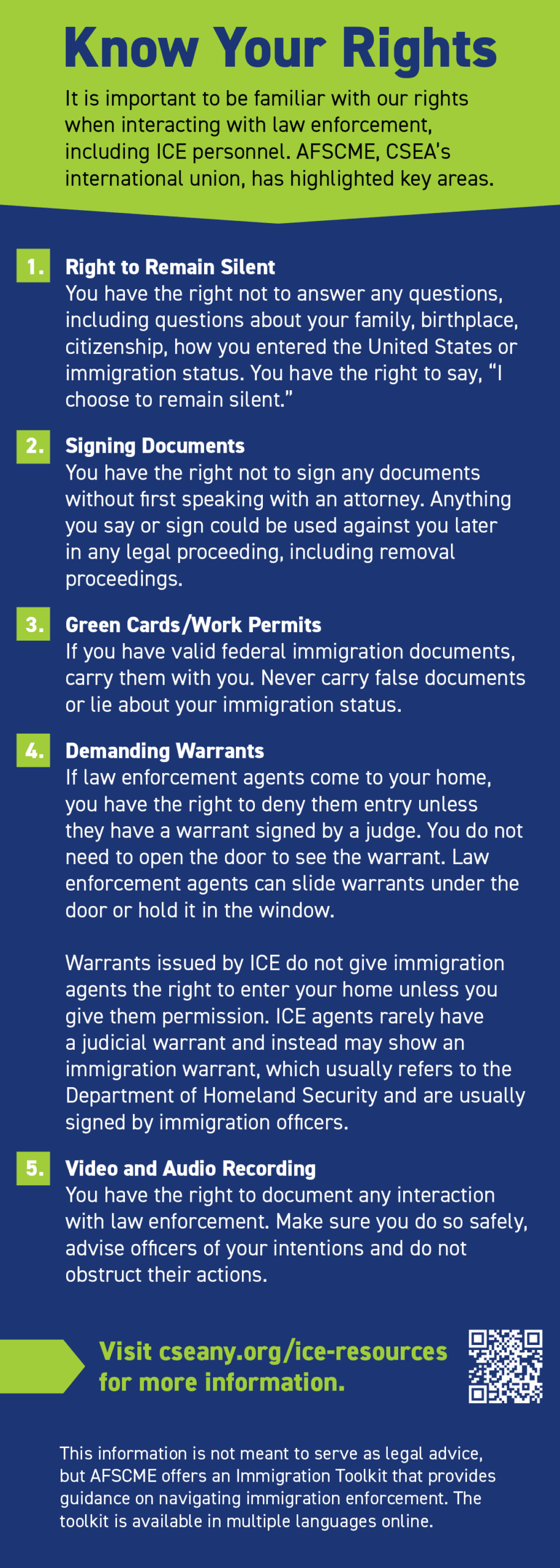
You have the right not to answer any questions, including questions about your family, birthplace, citizenship, how you entered the United States or immigration status. You have the right to say, “I choose to remain silent.”
You have the right not to sign any documents without first speaking with an attorney. Anything you say or sign could be used against you later in any legal proceeding, including removal proceedings.
If you have valid federal immigration documents, carry them with you. Never carry false documents or lie about your immigration status.
If law enforcement agents come to your home, you have the right to deny them entry unless they have a warrant signed by a judge. You do not need to open the door to see the warrant. Law enforcement agents can slide warrants under the door or hold it in the window.
Warrants issued by ICE do not give immigration agents the right to enter your home unless you give them permission. ICE agents rarely have a judicial warrant and instead may show an immigrations warrant, which usually refers to the Department of Homeland Security and are usually signed by immigration officers.
You have the right to document any interaction with law enforcement. Make sure you do so safely, advise officers of your intentions and do not obstruct their actions.
This information is not meant to serve as legal advice, but AFSCME offers an Immigration Toolkit (enespañol) that provides guidance on navigating immigration enforcement. The toolkit is available in multiple languages online.
The Immigrant Legal Resource Center (ILRC) recommends that every family creates a preparedness plan for immigration-related emergencies. This should include:
• A child care plan
• Being familiar with available legal services
•What to expect from a legal representative
• Knowing your rights.
A step-by-step guide to making a preparedness plan is available in multiple languages online.
In addition to AFSCME and ILRC, there are several other resources available:
NYS Attorney General’s Office (multilingual legal services hotline: (800)-NY-ICCPR)
NYS Office of New Americans Immigration Hotline — (800)-566-7636
New York Immigration Coalition
Immigrant Defense Project (en español)
The Legal Aid Society (offices across NYS)
See our Work Force coverage
Read more about CSEA members’ efforts to stand up for justice for detained workers.
OUR WORK FORCE COVERAGE

Member detentions highlight need for preparedness
As U.S. Immigration and Customs Enforcement (ICE) operations expand across the country, concern is mounting among working people.
CSEA stands united to bring Upstate workers home after ICE detentions
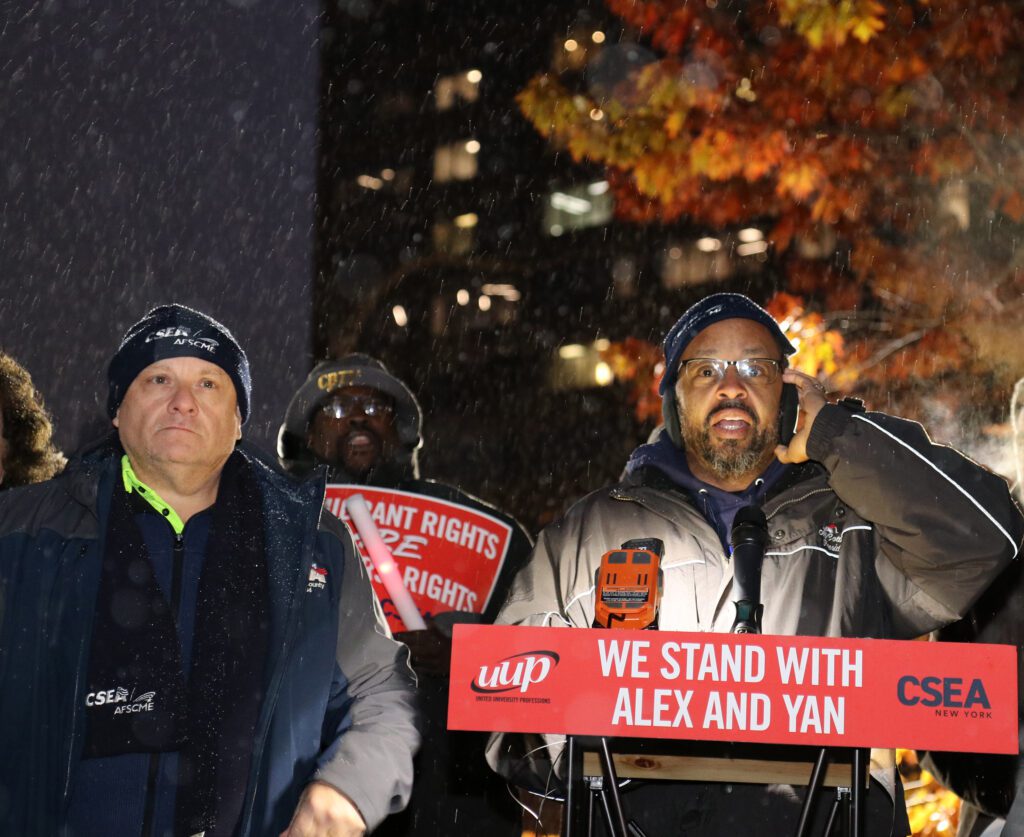
Hundreds of union members, elected officials and community supporters recently gathered outside the Syracuse Federal Building to send a single, urgent message: “Bring Them Home.”
CSEA demands release of members detained by ICE
CSEA is demanding justice after another member was recently detained by U.S. Immigration and Customs Enforcement (ICE).