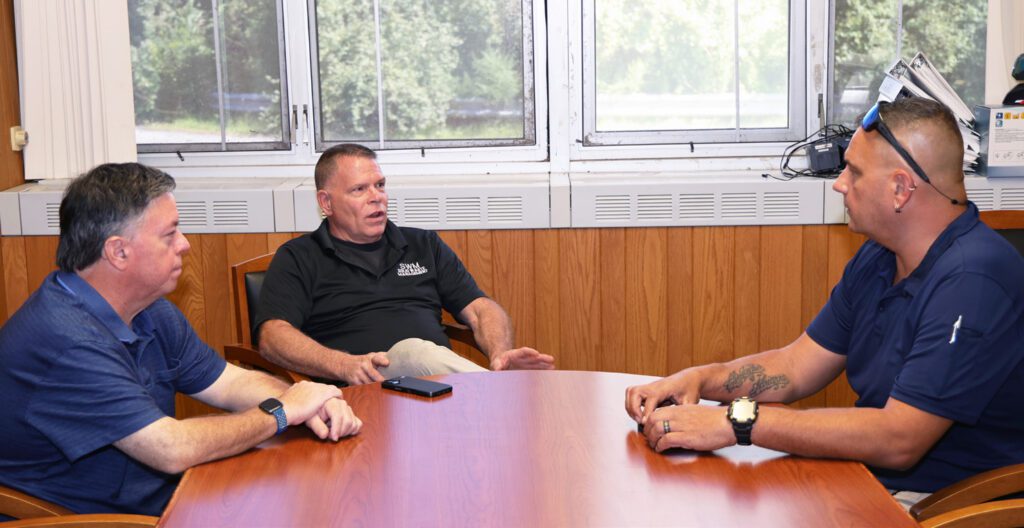
PORT WASHINGTON — For CSEA members and Port Washington Fire Department firefighters Brian Waterson, David Biggers and Patrick Saccoccia, Sept. 11, 2001, began like any other day when just like many Americans, their lives changed forever.
For most of the day, the firefighters watched the news and listened as events unfolded. Later that evening, the first request came in for them to go into Manhattan to respond.
‘Utter destruction’
On the day of the attacks, there was little to no communication with other firefighters as there was no electricity in most of lower Manhattan. First responders looked for the spots where they could provide immediate help.
The streets were eerily quiet as they drove through Battery Tunnel, with the normal hustle and bustle of New York City at a standstill.
“Coming out of the tunnel looked like a Norman Rockwell painting,” said Saccoccia. “All of the ashes coming down made it look like it was snowing.”
Sadly, on the other side of that perceived beauty was utter destruction.
“Initially, it felt like any other call,” said Waterson. “Then, we got out of our vehicle to begin what was then a rescue job and saw a detached arm lying in the street.”
Subsequent days were more organized, with firefighters receiving specific locations where their services were needed, including breaking glass windows to ensure there would not be incidents of glass shards falling and causing further injury.
Other days, members worked on “the piles” looking for signs of life, human remains, and safety hazards.
“There was a point when we had to climb up to the third floor of what remained of the World Trade Center to reach the top of the piles of debris, so we could walk on it and survey the area,” said Biggers.
One night, the members decided to sleep on the tables at a local bar, to be available to work recovery first thing in the morning.
The aftermath of a tragedy
Like some other 9/11 first responders, Waterson developed cancer six years later at age 27. He endured three major surgeries and four months of chemotherapy.
“They aren’t exactly sure if I got cancer because of exposure to debris and toxins during 9/11, but since I was on the ground, working as a firefighter, my medical needs were covered under the 9/11 fund,” said Waterson. “It was tough because I had just gotten engaged and was planning a wedding. It was a lot.”
Saccoccia developed acid reflux because of breathing in toxins.
To monitor for future conditions, the World Trade Center Health Program provides physical and psychological health services for eligible first responders, a benefit the members say they will have for life.
Since the attacks, Biggers admits to developing a hyper sense of situational awareness, always checking his surroundings to ensure he knows what is happening around him.
There are also official procedures in place that coordinate the efforts of Long Island and New York City firefighters during large-scale events to help prevent the apparent chaos that occurred following the attacks.
Living by the slogan “never forget,” the firefighters get together every year to remember what this country lived through and to celebrate the fact that they were together then and are still together now.
They also want future generations to acknowledge the one light in the midst of the tragedy.
“I want young people to know how everyone came together when we were under attack,” said Saccoccia. “There was no me this or you that; we had one common goal to get through what happened and we did.”
— Wendi Bowie