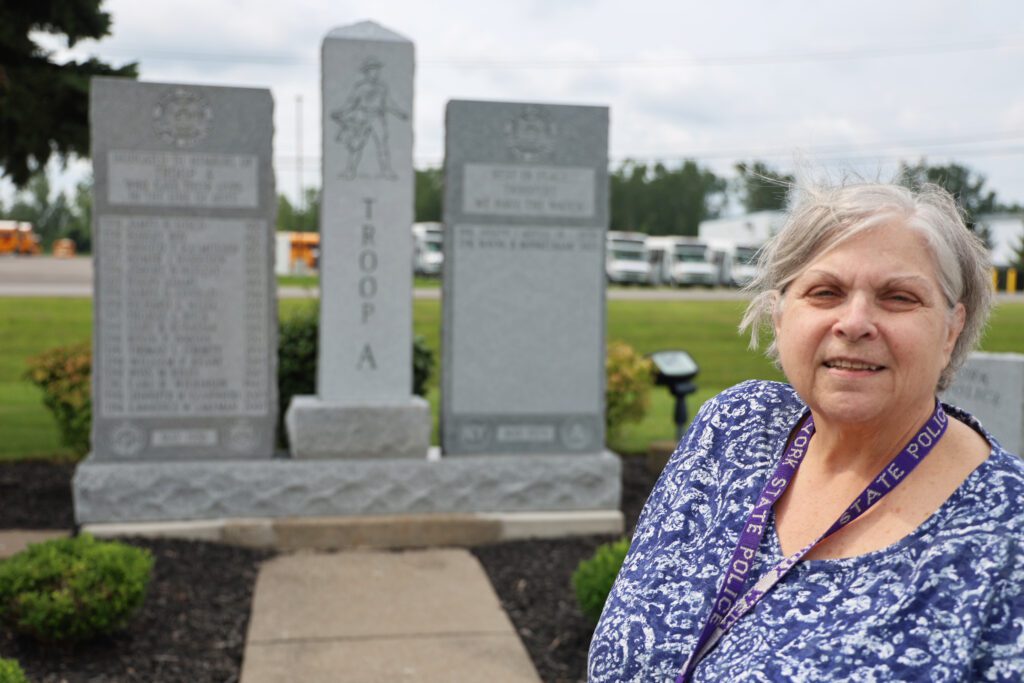
BATAVIA — On the morning of Sept. 11, 2001, Nancy Prevosto arrived at the former Holiday Inn on Grand Island for what was supposed to be a routine health benefits seminar.
Prevosto, who serves as CSEA Troop A – NYS Police (Batavia) Local President and an Office Assistant 3 at the agency, was among about 75 people at a training conducted by the state Department of Civil Service and Governor’s Office of Employee Relations (OER).
The session had barely begun when cellphones throughout the room suddenly started ringing.
“One of the presenters from OER had a phone that started [ringing],” said Prevosto. “Then, I’m hearing the other people from OER and some of the people from Civil Service and their phones started [ringing].”
Soon, there was an announcement: A plane had struck one of the World Trade Center towers.
At that early moment, no one knew whether it was an accident or a terrorist attack.
“The reaction from everyone in the room was pure shock,” said Prevosto.
The seminar was immediately put on hold. Prevosto called her first sergeant at Troop A headquarters and learned State Police were locking down bridges because they did not know what was happening.
“You can’t get off Grand Island right now,” the sergeant told Prevosto.
With no way to leave the island, the group gathered around televisions at the hotel and watched the events unfold.
Prevosto and other attendees watched the same national coverage as millions of Americans, witnessing the second plane strike the World Trade Center and then watching both towers collapse.
At about 1 p.m., the attendees were allowed to leave. Troopers were stationed at the bridge, and everyone was directed off Grand Island along the same route toward Interstate 190.
Watching a landmark disappear
For Prevosto, watching the towers fall carried a deeply personal meaning. She had witnessed the World Trade Center at three defining moments: as the towers rose, as they fell and as the country began confronting what remained.
A Long Island native, Prevosto had traveled into New York City as a child with her father, a civil engineer at the state Department of Transportation (DOT).
Together, they watched the progress as the World Trade Center towers were built. Her mother had also worked for DOT at 2 World Trade Center.
As Prevosto watched on television the collapse of the buildings, she remembered standing with her father and watching them rise.
One year later, while attending CSEA’s Annual Delegates Meeting in New York City, Prevosto visited the site.
Signs surrounding the site displayed the names and photographs of people who were missing and whose remains had not been found. Visitors could not get close to the ruins, but what Prevosto could see brought back vivid childhood memories.
“It was a very weird feeling seeing it in ruins,” said Prevosto. “I told my sisters I was having flashbacks of being there with my father when they were being built.”
All-hands on response
Troop A’s work changed immediately after the attacks. Troopers were ordered to report to New York City. Prevosto recalled groups of 15 to 20 troopers rotating through the city for weeklong assignments, which continued for nearly a year.
“It was all hands-on deck,” said Prevosto.
While the law enforcement response was visible to most people, Prevosto recalled the largely publicly unseen work of the New York State Police civilian employees and union members who supported the effort, which included agency dogs searching for remains.
Prevosto, who handled Troop A’s finances, purchases and vendor invoices, became part of that response when a State Police K-9 handler working at Ground Zero called with an urgent request to find protective coverings for the dogs’ paws.
The dogs were walking across the hot rubble contaminated by ash and other hazardous materials.
“He asked me where we could get special protective coverings for the K-9s’ paws,” said Prevosto. “[I told him] ‘We’ll figure it out.’”
Prevosto worked with the State Police finance office and K-9 field command to locate protective paw coverings.
“If their paws were burned, they couldn’t smell for [remains],” said Prevosto.
They ultimately found enough to equip the K-9 teams at the site.
The experience demonstrated how the State Police response extended far beyond the work most Americans saw on television. Civilian employees worked behind the scenes to process expenses, maintain vehicles, purchase supplies and ensure troopers and K-9 teams had what they needed.
Long-term toll
The danger did not end when the troopers returned.
State Police vehicles came back carrying dust, ash and contaminants from Ground Zero. The vehicles had to be washed, vacuumed and serviced, and contaminated air filters had to be replaced.
David Stefanella, a CSEA member who worked as a civilian mechanic at the State Police facility in LeRoy, worked on many of those vehicles.
“You think about washing the exterior and vacuuming the interior, but who would think to blow out the air filter?” said Prevosto. “Dave was the one handling them the most.”
Stefanella served the State Police from Jan. 10, 1994, until May 14, 2008. According to Prevosto, he later became seriously ill after working on vehicles returning from Ground Zero.
After his illness kept him out of work and his accrued leave ran low, Stefanella’s co-workers donated enough leave to cover him until he left the job on disability retirement.
“He never went without a paycheck because of the leave donations,” said Prevosto.
Stefanella died Jan. 30, 2020, at age 62.
For years after the attacks, Prevosto said, the public heard little about the troopers and civilian employees who became ill after being exposed to contaminants from Ground Zero or handling contaminated equipment.
“You never heard about people being sick for years, but it was happening,” she said.
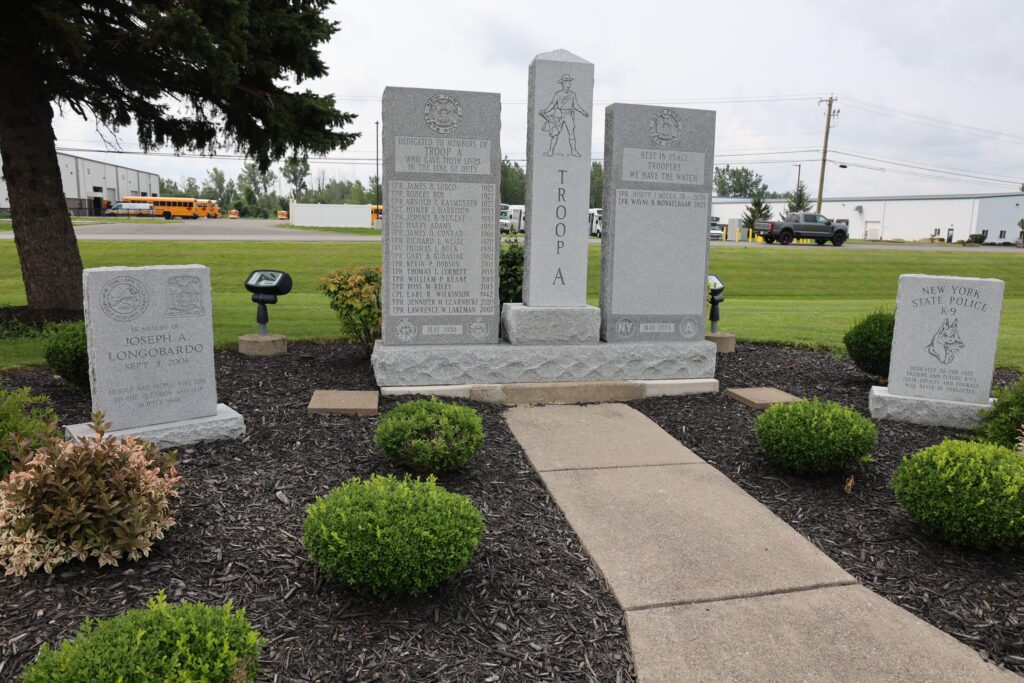
The Troop A Stone outside the troop’s headquarters in Batavia honors troopers who have died in the line of duty. Over the years, names have been added for troopers lost to cancers and other illnesses attributed to their work following the Sept. 11 attacks.
For Prevosto, those names are a continuing reminder that the toll of Sept. 11 did not end when the final Troop A rotation returned home. The toll remains visible in the growing list of names etched into the Troop A Stone.
— Sara McNicholas