
As CSEA continues leading the fight to Fix Tier 6, it’s helpful to step back and look at how New York’s pension system works, its tier structure, how it is funded, and why fixing our pensions is so important.
Brief history
The New York State Employees’ Retirement System (ERS) was established in 1921 to provide retirement security for public employees who dedicate their careers to serving our communities. Key to establishing the system was William Thomas, the first president of the State Association of Civil Service Employees, which became known as CSEA in 1946.
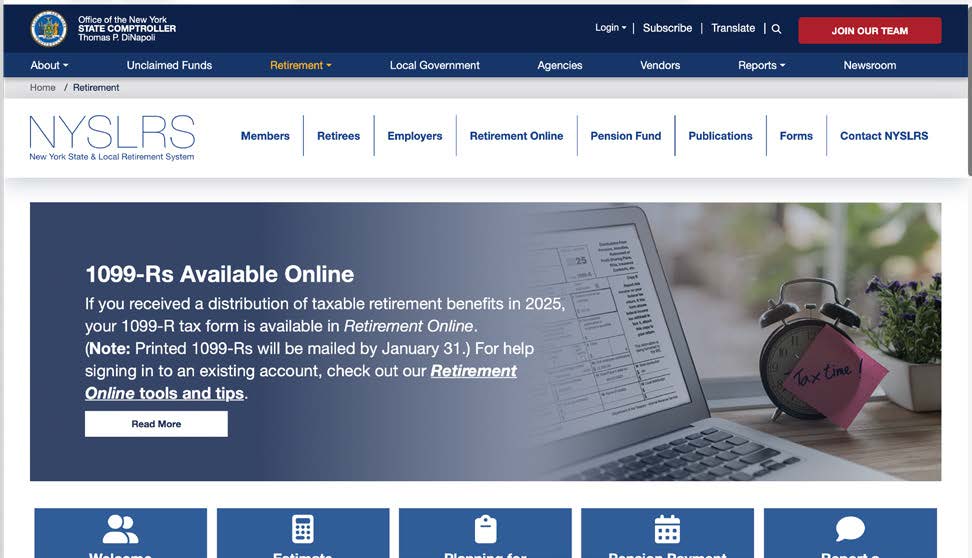
Today, the New York State and Local Retirement System (NYSLRS) is one of the largest and strongest public pension systems in the country.
Importantly, the New York State Constitution protects public pensions. Once you become a participant, your benefits cannot be reduced. That constitutional protection is the most important reason the system remains stable and trusted.
How the pension works
NYSLRS is a defined benefit plan, meaning your retirement benefit is determined by a formula set in law, not by individual investment performance.
Your pension is based on:
- Your years of service
- Your final average salary
- A benefit multiplier established in statute
When you retire, you receive a guaranteed monthly payment for life. That predictable income is a cornerstone of middle-class retirement security for public employees. Our pensions also play a vital role in New York state’s economy, as nearly 80% of public retirees stay in our state and generate about $12.6 billion in economic activity within New York.
How the pension is funded
The pension system is funded through three primary sources:
- Employee contributions: Most members contribute a percentage of their salary, depending on their tier.
- Employer contributions: The state and participating local governments and school districts make annual contributions determined by professional actuaries to ensure long-term funding. This makes up the largest share of the pension funding.
- Investment earnings: Sound investment returns also provide significant funding.
The pension fund is valued in the hundreds of billions of dollars and is professionally managed for long-term growth. The system pools contributions and invests collectively, which spreads risk and provides stability that individual retirement accounts cannot match.
Why the tier system exists
Members are placed into a “tier” based on the date they join the system. Over the decades, new tiers were created in response to budget pressures during times of recession or slow economic growth.
All tiers operate within the same pension system. But the rules vary—and those differences affect members’ careers and retirement security. Earlier tiers were established when public pensions were expanding as part of workforce development and middle-class growth. Later tiers—including Tier 5 and Tier 6—were enacted during fiscal crises to reduce long-term employer costs.
Tier 6, created in 2012 under former Gov. Andrew Cuomo, increased employee contribution rates, raised retirement ages and adjusted benefit calculations for new hires.
Why CSEA is fighting to Fix Tier 6
Tier 6 members often pay more over the course of their careers, work longer before qualifying for full benefits, and receive less favorable calculations than earlier tiers.
CSEA’s Fix Tier 6 campaign is about restoring parity among the tiers, strengthening retirement security, and ensuring fairness for the next generation of workers. This, in turn, benefits the state, local governments and schools by improving recruitment and retention of employees who provide essential public services.
New York’s pension system is strong. Fixing Tier 6 builds on that strength and ensures the system continues to work for everyone.
— Bryan Miller
Join the fight to Fix Tier Six: cseany.org/fix-tier-6